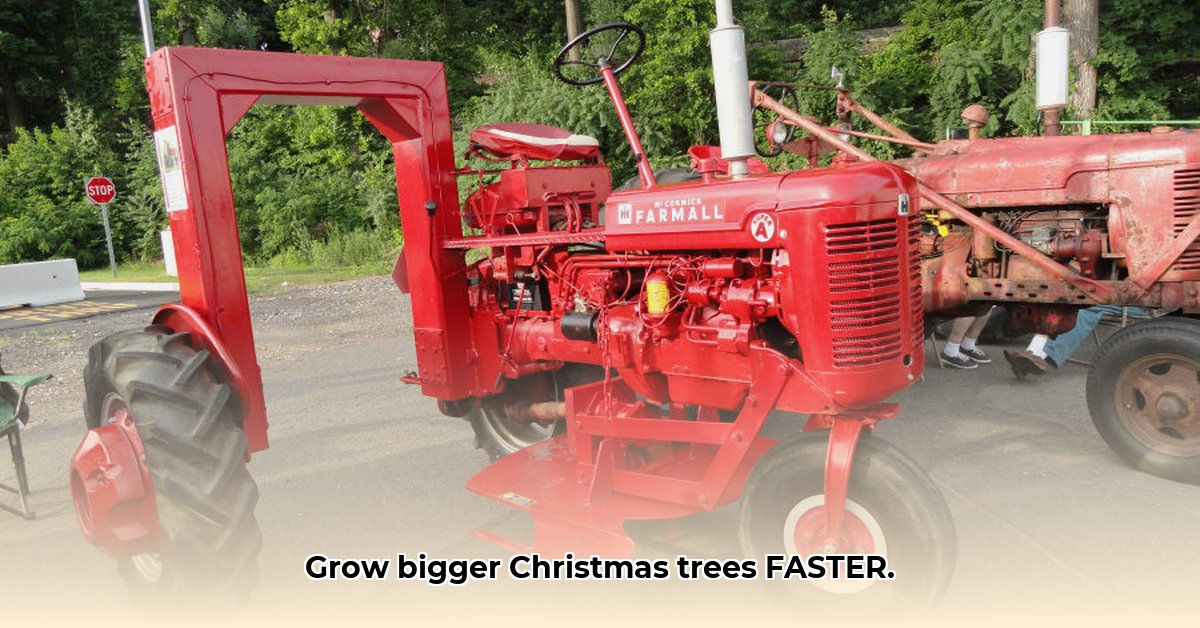
Christmas Tree Tractor: A Green Revolution?
The familiar scent of pine at Christmas evokes a nostalgic charm, but behind that comforting aroma lies the demanding reality of Christmas tree farming. Traditionally a labor-intensive endeavor, cultivating these festive evergreens presents significant challenges in terms of labor costs and environmental impact. However, a potential game-changer is emerging: the specialized portal tractor, promising to revolutionize the industry. This innovative technology offers exciting possibilities for increased efficiency and sustainability, but a thorough examination of its benefits and limitations is crucial before widespread adoption. Could this mechanization be the key to a more sustainable and profitable Christmas tree future? For more on farm equipment, check out this resource.
The Promise of Faster, Greener Christmas Tree Harvesting
Imagine a machine capable of effortlessly harvesting thousands of Christmas trees daily. Companies like DAMCON are developing portal tractors claiming to achieve harvest rates of up to 1500 trees per day and manage hundreds of acres annually. These impressive claims, however, require independent verification. While DAMCON's data provides a compelling initial glimpse, broader, independent research is needed to consolidate these findings and demonstrate the technology's effectiveness across various tree types, farm sizes, and geographical locations. A robust dataset, accounting for diverse conditions, is essential to accurately assess the productivity gains offered by these specialized tractors. This critical step will inform farmers and enable evidence-based decision-making regarding adoption.
The Economics of Christmas Tree Tractors: Is It Worth the Investment?
The allure of increased efficiency is undeniable, but economic viability is paramount. Before investing in a portal tractor, farmers need a comprehensive understanding of the total cost of ownership (TCO). This encompasses not only the initial purchase price but also crucial factors such as fuel costs, regular maintenance, and operator salaries. A significant hurdle currently is the lack of publicly available TCO data for these specialized tractors. Conducting robust cost-benefit analyses is crucial. These analyses should compare the costs and benefits of mechanized harvesting against traditional manual methods across a range of farm sizes and production levels. This will provide essential guidance to farmers on whether the investment justifies the expected return, ensuring responsible financial decisions.
Environmental Impact: Sustainable Christmas Trees?
Sustainability extends beyond mere efficiency gains. We must assess the environmental footprint of these powerful machines. Fuel consumption, greenhouse gas emissions, and potential soil compaction are crucial areas requiring investigation. A comprehensive life cycle assessment (LCA) is vital – evaluating the environmental impact from the tractor's manufacturing to its eventual disposal. The LCA will provide insights into the technology's long-term environmental consequences, unveiling whether benefits outweigh potential negative effects. This thorough examination will allow for informed decisions, ensuring that the pursuit of efficiency doesn't compromise environmental stewardship. The lack of readily available LCA studies currently poses a significant challenge.
Adaptability and Scalability: A One-Size-Fits-All Solution?
The success of Christmas tree tractors hinges on their adaptability to diverse farm sizes and tree types. The technology's effectiveness on small family farms must be evaluated, ensuring equitable access to improved technology. The ability to utilize a wide array of attachments—including sprayers, cultivators, and fertilizer spreaders—is crucial for versatility. However, rigorous testing under diverse conditions, considering factors such as tree density, soil types, and terrain, is necessary. Further research into optimal tractor specifications for varying scenarios will enhance the technology's overall applicability and benefit a wider range of growers. This adaptability is a key factor determining the technology's overall impact and adoption rate.
Actionable Steps: A Collaborative Effort
Successful implementation of portal tractors demands a collaborative effort from all stakeholders. Let's examine specific actions for each group:
| Stakeholders | Short-Term Actions (0-1 year) | Long-Term Actions (3-5 years) |
|---|---|---|
| Farmers | Conduct farm-specific feasibility studies; Explore leasing options before purchasing; Assess attachment suitability. | Invest in data-driven farm management; Explore equipment cooperatives to share costs and resources. |
| Manufacturers | Develop and publish detailed TCO analyses; Provide comprehensive operator training; Improve attachment modularity and interoperability. | Conduct thorough LCAs; Invest in sustainable fuel options; Focus on precision technologies to minimize waste. |
| Researchers | Conduct large-scale, independent field trials; Develop standardized metrics for sustainable cultivation. | Develop AI-powered farm management tools; Explore solutions for soil compaction. |
| Government Agencies | Offer financial incentives; Support research efforts through grants. | Develop policies promoting sustainable Christmas tree farming; Improve farmer access to credit. |
Navigating the Risks: A Cautious Approach
Adopting new technologies carries inherent risks. The following table outlines potential challenges and mitigation strategies:
| Technology/Practice | Risk Level | Mitigation Strategies |
|---|---|---|
| Portal Tractor Adoption | Medium | Thorough feasibility studies; leasing options; Robust maintenance plans; Comprehensive operator training; Insurance. |
| Attachment Compatibility | Medium | Standardized interfaces; Pre-purchase testing; Field evaluation. |
| Soil Compaction | Medium | Appropriate tire pressure; Careful traffic management; Soil conservation practices. |
| Initial Investment Cost | High | Secure financing; Explore government subsidies; Collaborative purchasing; Detailed cost-benefit analysis. |
Conclusion: A Greener, More Profitable Future
The portal tractor presents significant potential to revolutionize Christmas tree farming, offering increased efficiency and sustainability. However, responsible adoption necessitates a cautious, data-driven approach, fostering collaboration among all stakeholders. Further research and open communication are crucial for maximizing the technology's benefits while mitigating potential risks. By working together, we can cultivate a future where Christmas trees are grown sustainably and profitably.